مطورو الألعاب
Scenario: وضع نماذج أولية لتخطيطات المستويات القابلة للعب قبل اعتماد أصول المحرك
Outcome: التكرار في دقائق بدلاً من أيام، مع مشاهد قابلة لإعادة الاستكشاف
A capability of Happy Oyster
Directing Mode is where Happy Oyster actually diverges from text-to-video. You are not generating one locked clip — you are staging. Everything you change persists, which means the scene becomes a place instead of an artifact.
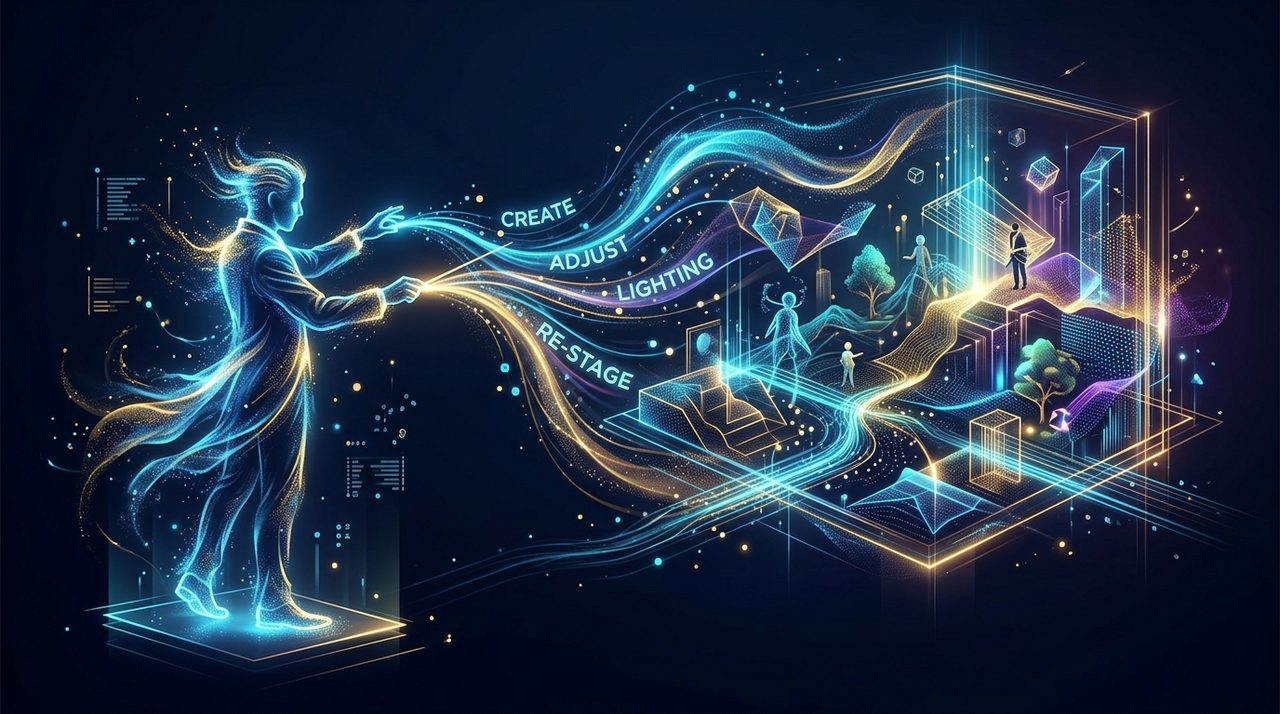
Write a prompt, get a base scene, then talk to it. Moving the camera, re-lighting, adding objects — each action edits the persistent 3D state rather than re-rolling a fresh generation. That's the mode's whole point, and it's the part competitors can't copy without re-architecting around world models.
وضع التوجيه is one of 4 capabilities that Happy Oyster exposes. It pairs best with the use cases listed below.
Scenario: وضع نماذج أولية لتخطيطات المستويات القابلة للعب قبل اعتماد أصول المحرك
Outcome: التكرار في دقائق بدلاً من أيام، مع مشاهد قابلة لإعادة الاستكشاف
Scenario: تصور مسبق لحركات الكاميرا عبر مجموعة مركبة
Outcome: يمكن للمخرج التجول في المشهد وتثبيت زوايا التصوير قبل بدء التصوير الفعلي
Scenario: بناء بيئات متفرعة للتركيبات والعروض التوضيحية
Outcome: أمر واحد ينتج عالماً قابلاً للتنقل، وليس مقطعاً ثابتاً
Same capability exists in no other model on the list — every competitor renders. Directing is the differentiating move, which is why the comparison row for Sora/Runway/Kling reads the way it does below.
| vs | On | Happy Oyster | Them |
|---|---|---|---|
| Sora | نموذج المخرجات | عالم ثلاثي الأبعاد قابل لإعادة الاستكشاف | مقطع فيديو خطي |
| Runway | تحكم المستخدم بعد التوليد | توجيه + تجوال في الوقت الفعلي | إعادة كتابة الأوامر وإعادة التوليد |
| Kling | حرية الكاميرا | تجول حر من منظور الشخص الأول | مسار كاميرا محدد مسبقاً عند التوليد |