Happy Oyster vs Seedance

Happy Oyster is Alibaba's 3D world simulator with interactive exploration, while Seedance is ByteDance's 2D video generator focused on cinematic clip production.

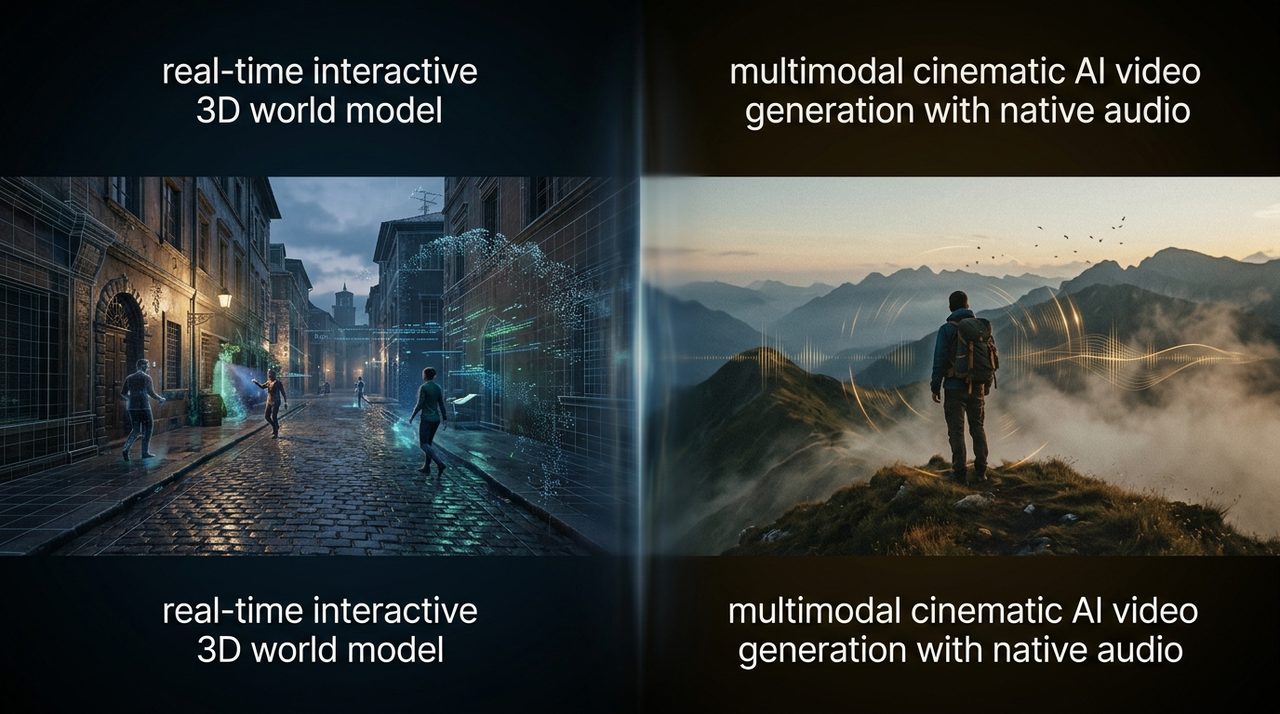
Happy Oyster vs Seedance comparison showing 3D world model versus 2D video generator

Key facts

Quick facts

Happy Oyster type

Verified

3D world simulator with Directing and Wandering modes, built by Alibaba ATH Innovation Division

Seedance type

Verified

2D text-to-video and image-to-video generator by ByteDance, launched June 2025

Core difference

Mixed

Happy Oyster produces interactive 3D environments; Seedance produces linear video clips up to 10 seconds

Comparison notes

Happy Oyster and Seedance represent two fundamentally different approaches to AI-generated visual content. If you are searching for a direct comparison, the short answer is that they solve different problems: Happy Oyster creates interactive 3D worlds, while Seedance produces polished 2D video clips.

What each model actually does

Happy Oyster is Alibaba's 3D world model, unveiled on April 16, 2026 by the ATH Innovation Division. It generates three-dimensional environments that users can explore and interact with in real time. Its two core modes, Directing and Wandering, allow users to either guide scene creation or freely navigate generated worlds. The underlying architecture supports native multimodal audio-video co-generation.

Seedance (version 1.0) is ByteDance's text-to-video model, originally launched in June 2025. It generates linear 2D video clips from text prompts, with support for image-to-video workflows. The first version of Seedance established ByteDance as a serious player in AI video generation but lacked audio generation and was limited to shorter clips.

Key differences at a glance

| Feature | Happy Oyster | Seedance (1.0) | |---|---|---| | Output type | Interactive 3D worlds | 2D video clips | | Exploration | Free-roam Wandering mode | Linear playback only | | Audio | Native audio-video co-generation | No native audio | | Interactivity | Real-time scene adaptation | Static output | | Primary use case | Games, VR, simulation | Social media, short-form video | | Access | Limited early access | Available via Dreamina | | Developer | Alibaba ATH Innovation | ByteDance Seed team |

Where Happy Oyster excels

Happy Oyster's strength is in producing persistent, explorable environments. For game developers, VR creators, and simulation engineers, the ability to generate a 3D world from a text prompt and then walk through it represents a genuine paradigm shift. The Directing mode gives creators control over scene composition, while the Wandering mode supports open exploration of generated spaces.

The native multimodal architecture means audio is generated alongside the visual output, not bolted on afterward. For interactive applications where spatial audio matters, this is a meaningful advantage.

Where Seedance excels

Seedance is purpose-built for video content creation. Its strength lies in producing polished, cinematic clips that look good on social media and in marketing materials. The model handles camera movements, lighting, and character animation in a way that is immediately useful for content creators who need finished video output.

For anyone whose primary need is a 2D video clip rather than an interactive environment, Seedance remains the more practical choice. Its integration with Dreamina and the broader ByteDance ecosystem also makes it accessible to a wide audience.

Which should you choose?

If you need interactive 3D content for games, VR experiences, or simulations, Happy Oyster is the more relevant model. If you need polished video clips for content creation, marketing, or social media, Seedance is the better fit. These are not directly competing products in most practical workflows.

For a deeper comparison workflow, explore what Elser.ai offers for evaluating AI video and 3D tools side by side. You can also read What Is Happy Oyster? for a full explainer or check Happy Oyster vs Seedance 2.0 for a comparison against ByteDance's latest multimodal model.

Note that Happy Oyster is currently in limited early access, so hands-on evaluation is restricted. Seedance is more widely available but is the older version of ByteDance's video model. Both products are evolving rapidly.

Mixed signal

Some facts are supported, but other details remain uncertain

Happy Oyster is newly launched with limited public benchmarks; Seedance feature claims are well-documented but direct comparison requires caution.

Readers should expect careful wording here because public reporting confirms the topic, while some product details still need cautious treatment.

Recommended tool

Done comparing? Start creating.

Skip the wait — try AI video generation right now with a tool that is available today.

Powered by Elser.ai — works independently of any model discussed above.

Try AI Image Animator

Unlock the Happy Oyster Prompt Library

Get tested prompts, comparison cheat sheets, and workflow templates delivered to your inbox.

Free. No spam. Unsubscribe anytime.

FAQ

Frequently asked questions

Is Happy Oyster a video generator like Seedance?

No. Happy Oyster is a 3D world simulator that creates interactive, explorable environments. Seedance generates flat 2D video clips from text or image prompts.

Which is better for filmmaking?

Seedance is currently better suited for traditional filmmaking with its cinematic camera controls and up to 10-second clips. Happy Oyster targets game development and interactive 3D content.

Are both from Chinese tech companies?

Yes. Happy Oyster is from Alibaba's ATH Innovation Division, and Seedance is from ByteDance's Seed team.