ゲーム開発者
Scenario: エンジン用アセットを作成する前にプレイ可能なレベルレイアウトをプロトタイピングする
Outcome: 数日ではなく数分で反復制作が可能になり、再探索可能なシーンを実現
A capability of Happy Oyster
Directing Mode is where Happy Oyster actually diverges from text-to-video. You are not generating one locked clip — you are staging. Everything you change persists, which means the scene becomes a place instead of an artifact.
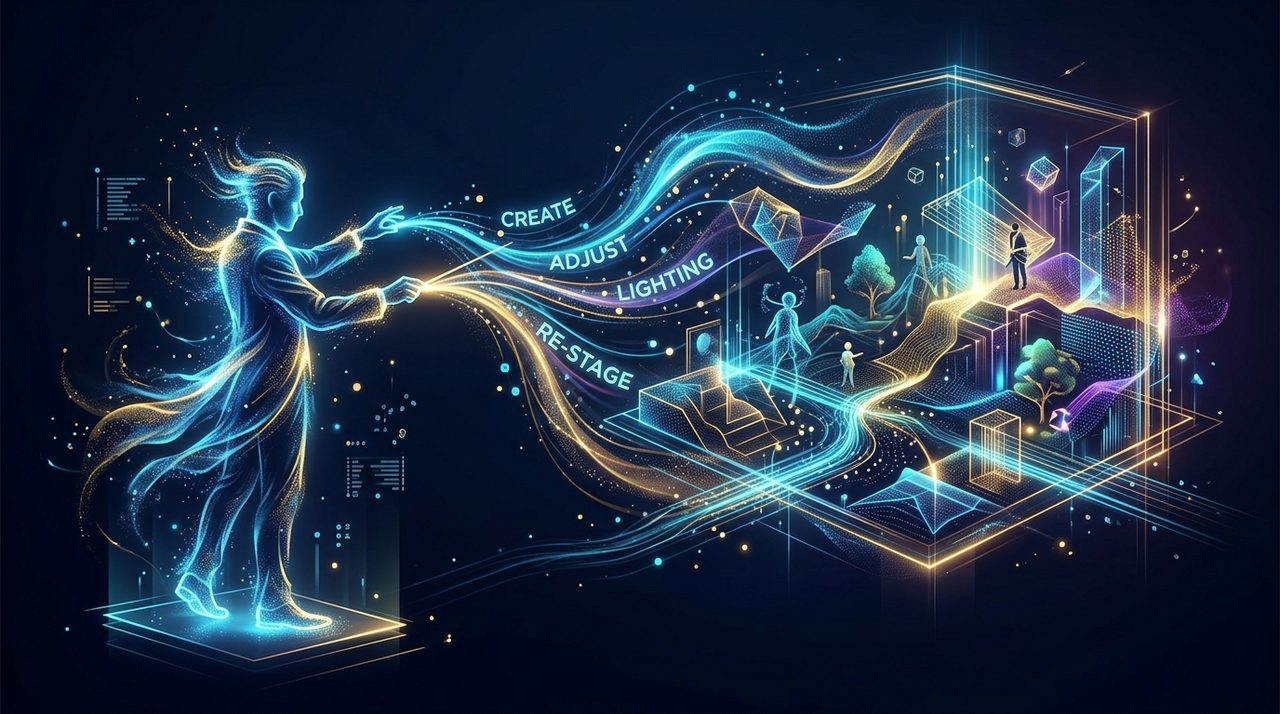
Write a prompt, get a base scene, then talk to it. Moving the camera, re-lighting, adding objects — each action edits the persistent 3D state rather than re-rolling a fresh generation. That's the mode's whole point, and it's the part competitors can't copy without re-architecting around world models.
ディレクティングモード is one of 4 capabilities that Happy Oyster exposes. It pairs best with the use cases listed below.
Scenario: エンジン用アセットを作成する前にプレイ可能なレベルレイアウトをプロトタイピングする
Outcome: 数日ではなく数分で反復制作が可能になり、再探索可能なシーンを実現
Scenario: 合成されたセット内でのカメラワークをプレビジュアライゼーションする
Outcome: 撮影前にディレクターがシーン内を歩き回り、構図を確定できる
Scenario: インスタレーションやデモ用に分岐する環境を構築する
Outcome: 1つのプロンプトからフラットな動画ではなく、移動可能な世界を生成
Same capability exists in no other model on the list — every competitor renders. Directing is the differentiating move, which is why the comparison row for Sora/Runway/Kling reads the way it does below.
| vs | On | Happy Oyster | Them |
|---|---|---|---|
| Sora | 出力パラダイム | 再探索可能な3Dワールド | 線形ビデオクリップ |
| Runway | 生成後のユーザー制御 | リアルタイムでの指示と探索 | 再プロンプトと再生成 |
| Kling | カメラの自由度 | 一人称視点での自由な移動 | 生成時に固定されたカメラパス |