Game developers
Scenario: Prototyping playable level layouts before committing engine assets
Outcome: Iteration in minutes instead of days, with re-explorable scenes
A capability of Happy Oyster
Directing Mode is where Happy Oyster actually diverges from text-to-video. You are not generating one locked clip — you are staging. Everything you change persists, which means the scene becomes a place instead of an artifact.
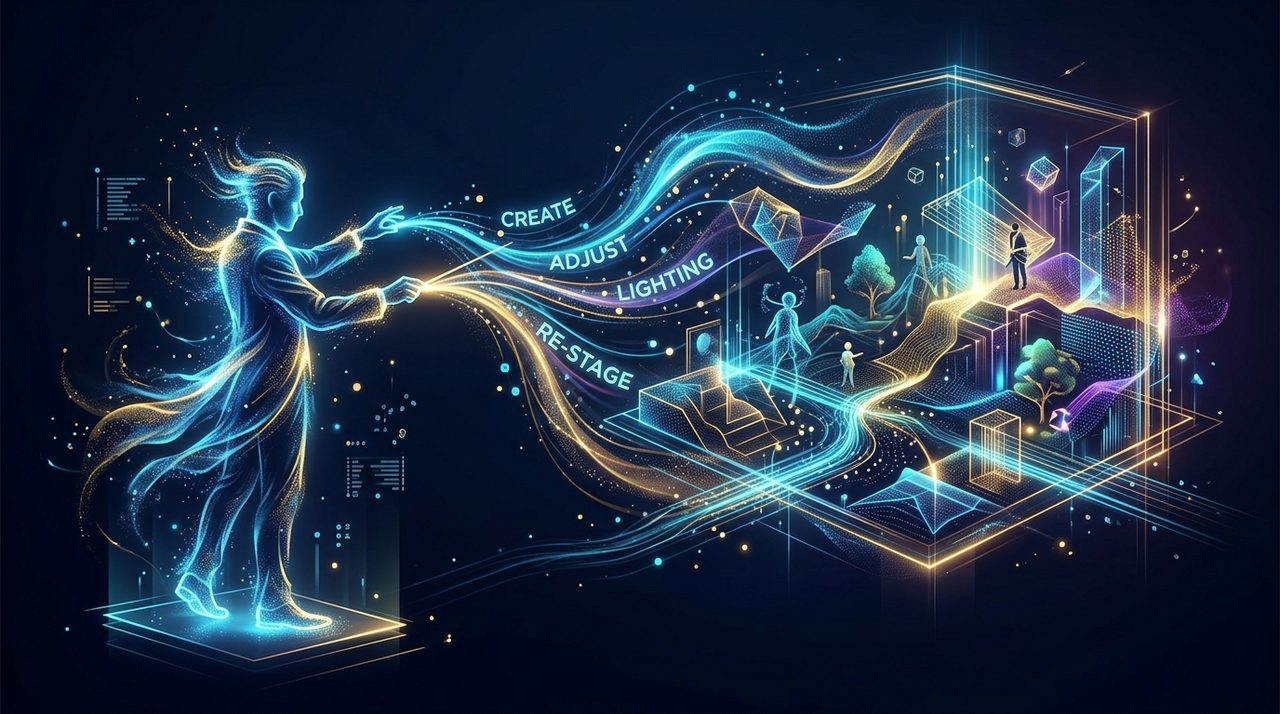
Write a prompt, get a base scene, then talk to it. Moving the camera, re-lighting, adding objects — each action edits the persistent 3D state rather than re-rolling a fresh generation. That's the mode's whole point, and it's the part competitors can't copy without re-architecting around world models.
Directing Mode is one of 4 capabilities that Happy Oyster exposes. It pairs best with the use cases listed below.
Scenario: Prototyping playable level layouts before committing engine assets
Outcome: Iteration in minutes instead of days, with re-explorable scenes
Scenario: Previsualizing camera moves through a synthesized set
Outcome: Director can wander a scene and lock blocking before a shoot
Scenario: Building branching environments for installations and demos
Outcome: One prompt yields a navigable world, not a flat clip
Same capability exists in no other model on the list — every competitor renders. Directing is the differentiating move, which is why the comparison row for Sora/Runway/Kling reads the way it does below.
| vs | On | Happy Oyster | Them |
|---|---|---|---|
| Sora | Output paradigm | Re-explorable 3D world | Linear video clip |
| Runway | User control after generation | Direct + wander in real time | Re-prompt and regenerate |
| Kling | Camera freedom | Free first-person traversal | Camera path baked at generation time |