游戏开发者
Scenario: 在提交引擎资产前,快速原型化可游玩的关卡布局
Outcome: 在几分钟内完成迭代而非几天,并能反复探索场景
A capability of Happy Oyster
Directing Mode is where Happy Oyster actually diverges from text-to-video. You are not generating one locked clip — you are staging. Everything you change persists, which means the scene becomes a place instead of an artifact.
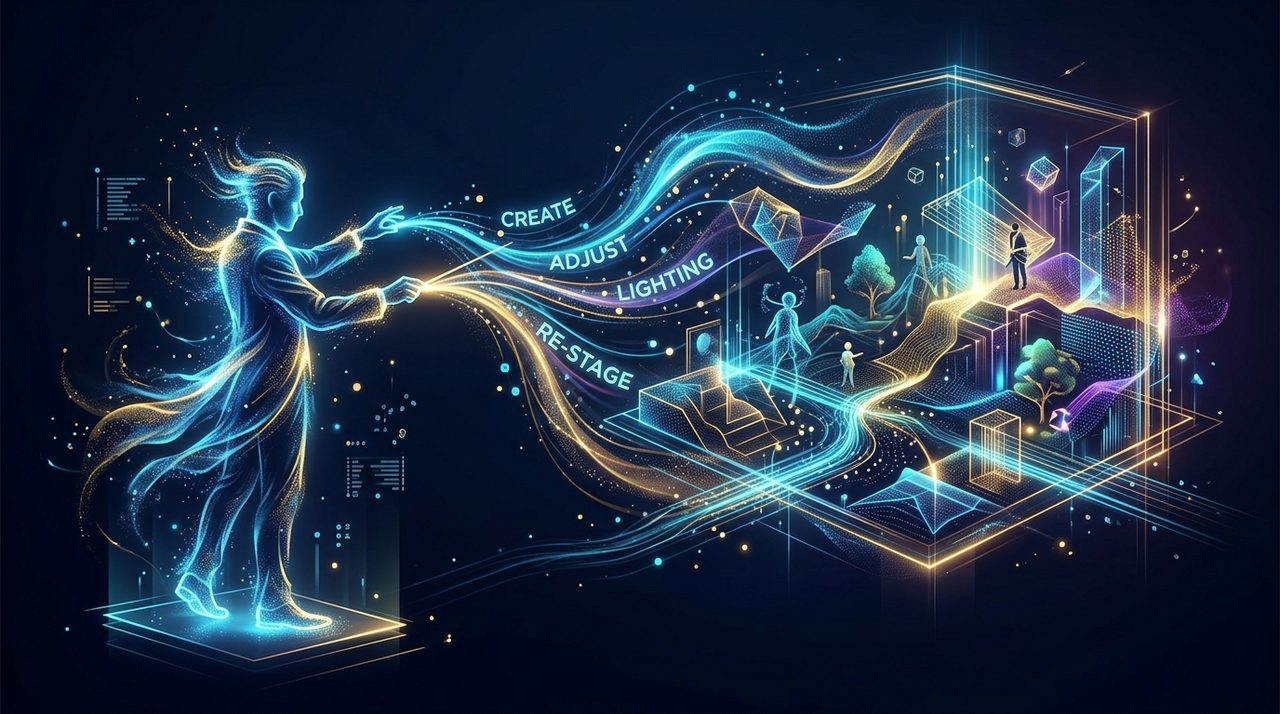
Write a prompt, get a base scene, then talk to it. Moving the camera, re-lighting, adding objects — each action edits the persistent 3D state rather than re-rolling a fresh generation. That's the mode's whole point, and it's the part competitors can't copy without re-architecting around world models.
导演模式 is one of 4 capabilities that Happy Oyster exposes. It pairs best with the use cases listed below.
Scenario: 在提交引擎资产前,快速原型化可游玩的关卡布局
Outcome: 在几分钟内完成迭代而非几天,并能反复探索场景
Scenario: 在合成场景中预可视化摄像机移动轨迹
Outcome: 导演可在拍摄前漫游场景并锁定分镜
Scenario: 为装置艺术和演示构建分支环境
Outcome: 一条提示词即可生成可导航的世界,而非平面的视频片段
Same capability exists in no other model on the list — every competitor renders. Directing is the differentiating move, which is why the comparison row for Sora/Runway/Kling reads the way it does below.
| vs | On | Happy Oyster | Them |
|---|---|---|---|
| Sora | 输出范式 | 可重新探索的 3D 世界 | 线性视频片段 |
| Runway | 生成后的用户控制力 | 实时导演 + 漫游 | 重新提示并重新生成 |
| Kling | 摄像机自由度 | 自由第一人称遍历 | 摄像机路径在生成时即已固定 |