Target use case
VerifiedAlibaba explicitly positions gaming as one of Happy Oyster's primary content production targets
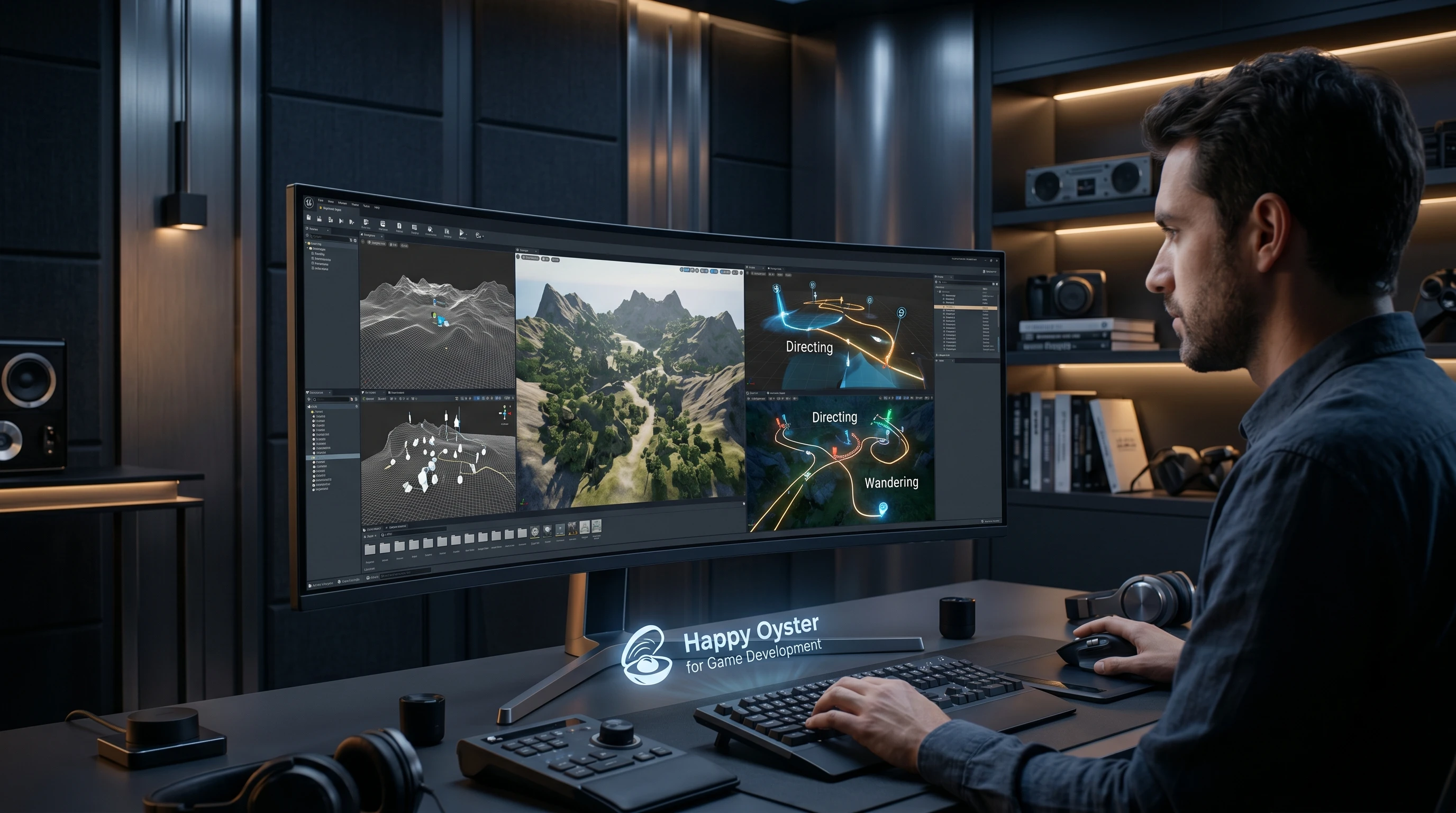
A practical tutorial on applying Happy Oyster's Directing and Wandering modes to game development workflows, including level design, NPC environments, and procedural world building.
Key facts
Alibaba explicitly positions gaming as one of Happy Oyster's primary content production targets
Happy Oyster adapts and changes scenes in real time based on user actions, which aligns with interactive game development needs
Positioned as a rival to Tencent's HY-World 2.0 in the world model space for games
Recommended tool
Put what you learned into practice with a beginner-friendly AI animation workflow.
Powered by Elser.ai — use it as a practical next step after the guide.
Try AI Image AnimatorMixed signal
Game development is one of Alibaba's stated target use cases. Specific workflow integrations are projected based on the model's confirmed capabilities.
Readers should expect careful wording here because public reporting confirms the topic, while some product details still need cautious treatment.
Alibaba launched Happy Oyster on April 16, 2026, with gaming explicitly named as a primary target for the 3D world model. This tutorial covers how game developers can think about integrating Happy Oyster's capabilities into their workflows based on what is currently known.
Traditional game development requires manual environment creation: modeling geometry, texturing surfaces, placing assets, scripting behaviors, and composing audio. A world model like Happy Oyster approaches this differently by generating entire interactive environments from prompts and user direction.
The practical shift is from building worlds piece by piece to describing and directing worlds that the model constructs in real time. For game developers, this has the most immediate potential in three areas:
Directing mode puts you in control of a physical world as it generates. For game development, this translates to an interactive level design workflow:
The key advantage over static generation tools is the real-time feedback loop. You direct the world as it builds, which is closer to how level designers actually think about space.
Wandering mode generates endlessly expanding first-person environments from a single prompt. For game developers working on open-world or exploration-focused games, this offers a new approach to content generation:
The model's world evolution modeling means generated areas maintain internal consistency as you explore, which is essential for environments that need to feel coherent to players.
As of April 2026, Happy Oyster is in early access and specific game engine integrations have not been announced. Developers should consider:
Alibaba positions Happy Oyster as a direct competitor to Tencent's HY-World 2.0 in the world model space. Google's Genie 3 and World Labs' Marble also target interactive 3D generation. For game developers evaluating these options, tools like Elser.ai can help compare capabilities and track availability across multiple AI generation platforms.
For the full use-case perspective, see Happy Oyster for game developers. For the broader world generation tutorial, start with Happy Oyster 3D world generation.
This website is an independent informational and comparison resource and is not the official Happy Oyster website or service.
Get tested prompts, comparison cheat sheets, and workflow templates delivered to your inbox.
FAQ
Happy Oyster generates interactive 3D environments in real time, but integration with game engines like Unity or Unreal has not been officially confirmed. The model produces explorable worlds, and the extent of game-engine export capabilities remains to be seen.
HY-World 1.5 is open-source and supports first-person and third-person perspectives with action control. Happy Oyster offers native audio-video co-generation and real-time scene adaptation. Both target game developers, but with different technical approaches.
Pricing has not been announced. The model is currently in limited early access, and commercial terms have not been publicly clarified.