Mode purpose
VerifiedFirst-person exploration of endlessly expanding 3D environments from a single prompt
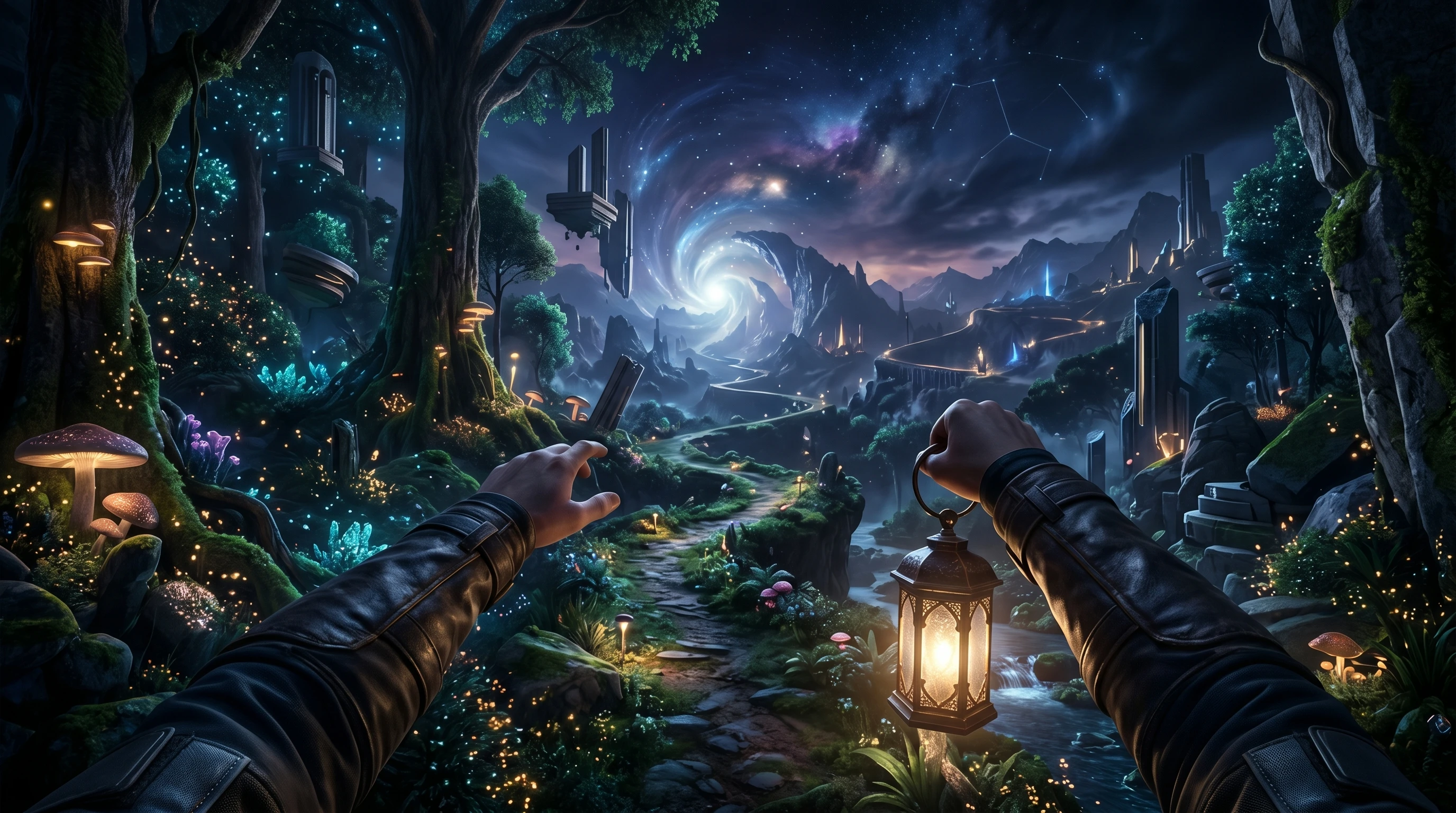
Wandering mode in Happy Oyster generates endlessly expanding 3D environments from a single prompt, letting you explore in first person as the world grows around you with consistent physics and atmosphere.
Key facts
First-person exploration of endlessly expanding 3D environments from a single prompt
Environment grows and expands as the user moves through it
Maintains visual and physical coherence as new areas generate
Recommended tool
Put what you learned into practice with a beginner-friendly AI animation workflow.
Powered by Elser.ai — use it as a practical next step after the guide.
Try AI Image AnimatorVerified signal
Wandering mode as a core function is confirmed by multiple sources. The endlessly expanding environment and first-person perspective are specifically described in press coverage.
The copy can stay direct because the core claims on this page are supported by public evidence.
Wandering mode is Happy Oyster's exploration-focused interaction paradigm. While Directing mode puts you in the creative director's chair, Wandering mode puts you inside the world itself. You write one prompt, the model generates an initial 3D environment, and then the world grows around you as you explore it in first person.
The fundamental concept is straightforward. You provide a text prompt describing an environment, and Happy Oyster generates a 3D world you can navigate from a first-person perspective. What makes this different from a pre-rendered 3D environment is that the world is not finite. As you move toward the edges of what has been generated, new areas appear.
This is what Alibaba describes as "world evolution modeling over long time spans." The model does not just render a fixed scene; it maintains a model of how the world should continue to exist beyond what you have already seen. When you explore a new corridor in a generated building, the model decides what should be at the end of that corridor based on the architectural logic it has already established.
The result is a world that maintains consistency. If you are exploring a Gothic cathedral, the architectural style, lighting conditions, and atmospheric qualities stay coherent as new rooms and passages generate. The model does not randomly switch to a different style when extending the world.
Audio co-generation means the soundscape evolves as you move. Walking from an outdoor courtyard into an interior hallway changes the acoustic environment naturally, with sound reflections and ambient noise adjusting to match the space.
Concept exploration for game designers: Instead of planning every detail of a game level upfront, describe the general environment and explore what the model generates. You might discover architectural layouts, lighting effects, or spatial relationships you would not have designed yourself. Use these as inspiration for formal level design.
Location scouting for film and video: Walk through generated environments to find compositions, lighting setups, and visual moments that work for specific scenes. This is virtual location scouting at a speed that is not possible with physical locations or traditional 3D modeling.
Interactive experience prototyping: For creators building explorable digital experiences, Wandering mode provides a way to test what it feels like to move through a space before investing in production-quality assets. The first-person perspective gives you the user's actual view, not an abstract overhead map.
Creative ideation: Sometimes the best creative output comes from exploring possibilities rather than directing them. Wandering mode lets the world simulator surprise you with environmental details, spatial relationships, and atmospheric combinations you did not explicitly request.
Wandering mode prompts should describe spaces that are worth exploring. This means environments with depth, variety, and implied connectivity. See Happy Oyster Prompts for a full library of examples, but the key principles are:
Describe spaces with multiple possible paths. "A branching cave system with underground pools, crystal formations, and ancient carvings" gives the model more room to generate interesting areas than "a single cave room."
Suggest environmental variety within a coherent theme. "A vertical city built into a canyon wall, with markets on lower levels, residences in the middle, and gardens at the top" implies distinct areas connected by a unifying concept.
Include atmospheric and sensory details. Since audio co-generates with the visuals, descriptions of sounds, weather, and ambient conditions make the exploration richer. "Distant waves crashing" and "wind through ruins" give the model audio cues to weave into the experience.
Previous world models like Cosmos and HY-World 1.5 generated pixel-level video, essentially creating recordings of worlds rather than explorable worlds themselves. Wandering mode is closer to walking through a generated environment than watching footage of one.
Tencent's HY-World 2.0 takes a different approach by outputting editable 3D assets (meshes and Gaussian Splattings) that can be imported into game engines. This gives more post-generation flexibility but lacks the real-time first-person exploration experience that Wandering mode provides.
For creators who want to experiment with visual content creation while Happy Oyster access remains limited, tools like Elser.ai's AI Animation Generator offer practical starting points for animated visual workflows.
For the control-focused counterpart, see Directing Mode. For general guidance, check How to Use Happy Oyster. For access information, visit Try Happy Oyster.
Get tested prompts, comparison cheat sheets, and workflow templates delivered to your inbox.
FAQ
The world expands as you move. There is no fixed boundary. New areas generate based on the context of existing areas and your original prompt.
Wandering mode is primarily for exploration. For creative control over world elements, use Directing mode instead.
Prompts that describe expansive, interconnected spaces with multiple paths or areas to explore produce the richest Wandering mode experiences.