Target use case
VerifiedAlibaba explicitly names film production alongside gaming as a primary target for Happy Oyster
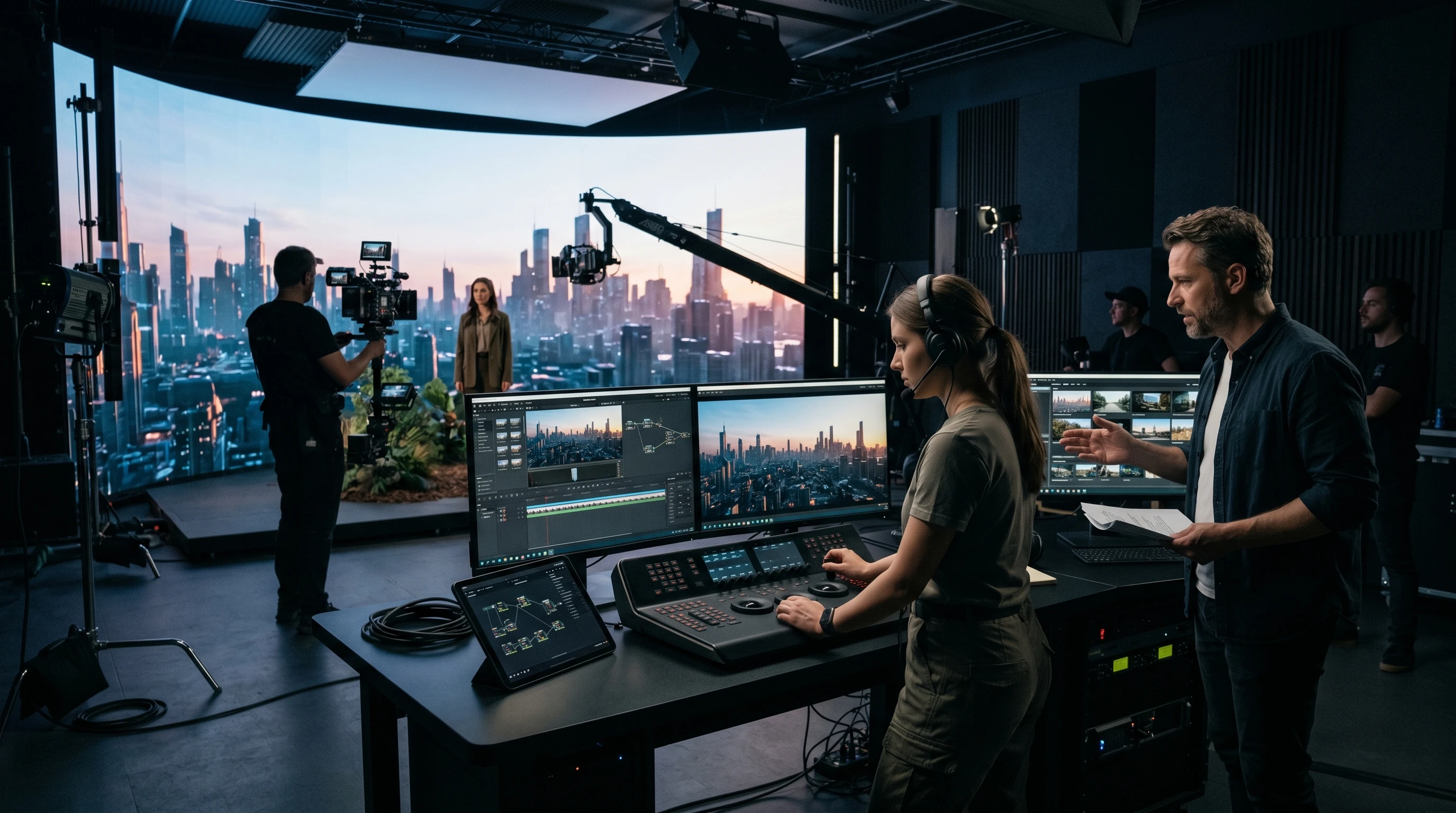
A use-case overview showing how filmmakers can apply Happy Oyster's real-time 3D world generation to previsualization, virtual production, and creative direction workflows.
Key facts
Alibaba explicitly names film production alongside gaming as a primary target for Happy Oyster
Real-time control over lighting, storyline, and environmental elements during scene generation
Native multimodal architecture produces synchronized audio alongside visual content without separate sound design steps
Recommended tool
Use a public AI video workflow today while official release timing stays uncertain.
Powered by Elser.ai — a public-facing fallback while launch details stay fluid.
Try AI Image AnimatorMixed signal
Film production is a confirmed target use case. Specific production workflow applications are projected from the model's documented real-time direction and multimodal capabilities.
Readers should expect careful wording here because public reporting confirms the topic, while some product details still need cautious treatment.
Film production is one of two primary use cases Alibaba identified when launching Happy Oyster on April 16, 2026. The 3D world model's ability to generate interactive environments with real-time directorial control maps to several specific filmmaking workflows that traditionally require significant time and resource investment.
Previsualization typically requires specialized software, dedicated previs artists, and days or weeks of iteration. Happy Oyster's Directing mode compresses this by letting directors generate and modify 3D environments in real time:
For independent filmmakers and smaller productions that cannot afford extensive previs teams, this capability could meaningfully change what is possible in pre-production.
Virtual production using LED volumes and real-time rendering has become standard at the high end of film production. Happy Oyster's real-time 3D generation has potential applications in this space:
Environment plate generation. Create background environments for virtual production stages. The model generates 3D worlds that could serve as source material for background plates, though export format compatibility with VP systems has not been confirmed.
Concept-to-volume pipeline. Use Directing mode to rapidly prototype how a virtual set would look and feel before committing to final Unreal Engine or Unity builds. This adds an AI-driven concepting phase to the virtual production pipeline.
Dynamic set extension. For scenes requiring environments that extend beyond physical set boundaries, Happy Oyster's ability to generate coherent, endlessly expanding environments through Wandering mode could provide source material for set extensions.
One of Happy Oyster's strongest differentiators for filmmakers is native audio-video co-generation. The multimodal architecture produces synchronized sound alongside visuals, which changes the concepting workflow:
This does not replace professional sound design and mixing, but it front-loads audio evaluation into the creative process where it can influence direction choices earlier.
Happy Oyster targets content production at multiple scales:
The sister model Happy Horse, focused on 2D video generation, topped global benchmarks upon its launch a week before Happy Oyster. Filmmakers working across both 2D and 3D content can potentially leverage both models from Alibaba's ATH Innovation Division.
Happy Oyster is in limited early access as of April 2026. Filmmakers interested in AI-powered production tools can also explore Google's Genie 3 for photorealistic world generation and World Labs' Marble for downloadable 3D environments.
For comparing and accessing multiple AI generation tools through a single workflow, Elser.ai offers a unified platform that tracks tool availability and capabilities across the category.
This website is an independent informational and comparison resource and is not the official Happy Oyster website or service.
Get tested prompts, comparison cheat sheets, and workflow templates delivered to your inbox.
FAQ
Happy Oyster can accelerate previsualization by generating explorable 3D environments with real-time control. It does not replace purpose-built previs tools but offers a faster way to explore visual concepts before committing to detailed previs work.
The model is in early access and output quality for final production use has not been independently verified. It is most likely suited for concepting, previs, and prototype phases at this stage.
Synchronized audio is generated alongside visual content, which means scratch audio for scene evaluation is available immediately. This helps directors evaluate the emotional and atmospheric impact of scenes earlier in production.