Core capability
VerifiedHappy Oyster generates interactive, performable, and explorable AI digital worlds in real time
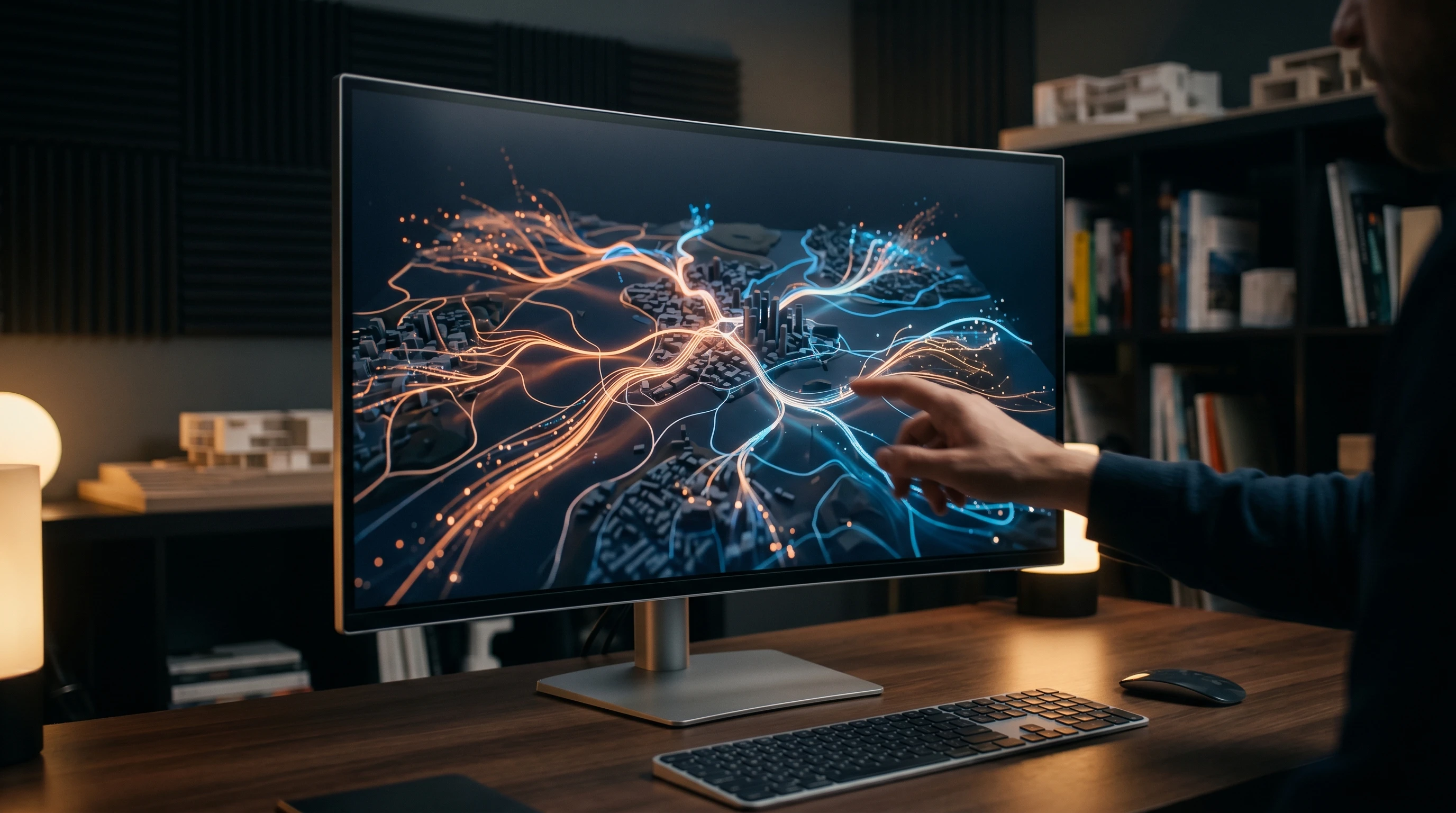
An overview of how Happy Oyster's real-time world generation enables new forms of interactive content including explorable narratives, immersive experiences, and audience-directed storytelling.
Key facts
Happy Oyster generates interactive, performable, and explorable AI digital worlds in real time
Alibaba describes the approach as shifting from passive generation to active simulation of world evolution
Native audio-video co-generation creates immersive content with synchronized sound without separate production steps
Recommended tool
Use a public AI video workflow today while official release timing stays uncertain.
Powered by Elser.ai — a public-facing fallback while launch details stay fluid.
Try AI Image AnimatorMixed signal
Interactive content is implied by Happy Oyster's real-time generation and interaction capabilities. Specific interactive content formats are projected from documented features.
Readers should expect careful wording here because public reporting confirms the topic, while some product details still need cautious treatment.
Happy Oyster introduces a category of content that does not fit neatly into existing labels. It is not video because users can interact with and explore the output. It is not a game because there are no predefined mechanics or objectives. Alibaba describes it as creating "interactive, performable, and explorable AI digital worlds in real time," which positions Happy Oyster as a tool for content that lives between passive viewing and active play.
Traditional AI-generated content is passive. You write a prompt, receive an output, and view it. Happy Oyster changes this relationship in two ways:
The audience participates. Through Wandering mode, viewers become explorers. They move through an endlessly expanding first-person environment generated from a prompt. The content is not a fixed sequence; it is a living world that generates new areas as the audience moves through it.
The creator directs live. Through Directing mode, creators control the world as it generates. They adjust lighting, modify the environment, and shape the narrative in real time. This is not editing a finished product but actively performing the creation in front of or alongside an audience.
This shift from "passive generation" to "active simulation of world evolution," as Alibaba describes it, opens content formats that did not previously exist outside of expensive custom development.
Create stories where the audience physically moves through the environment. Instead of watching a fixed camera angle, viewers choose where to look and where to go. The world model maintains narrative coherence while allowing spatial freedom. This applies to:
Directing mode enables a new performance format where a creator builds and modifies a world in front of an audience. The closest existing analogy is live VJing or real-time generative art performance, but with full 3D environments and synchronized audio:
Brands investing in experiential marketing can use Happy Oyster to create explorable branded environments:
For interactive content, the native audio-video co-generation is particularly important. Immersion depends on audio-visual coherence, and generating them separately introduces synchronization challenges. Happy Oyster's multimodal architecture produces ambient sound, environmental audio, and atmospheric music as part of the world generation, which maintains immersion as users explore.
Building interactive 3D content traditionally requires game engines, 3D modelers, animators, sound designers, and programmers. World models like Happy Oyster compress this pipeline into a prompt-and-direct workflow. The tradeoff is less precise control over individual elements, but dramatically faster iteration and lower resource requirements.
Other world models in this space include Google's Genie 3, which focuses on photorealistic navigable worlds, and Tencent's HY-World, which offers open-source access. Happy Oyster differentiates through its combined Directing and Wandering modes and native audio co-generation.
For creators evaluating interactive content tools across the AI landscape, Elser.ai offers a unified workflow for comparing and accessing different generation platforms.
This website is an independent informational and comparison resource and is not the official Happy Oyster website or service.
Get tested prompts, comparison cheat sheets, and workflow templates delivered to your inbox.
FAQ
Traditional interactive content requires building and scripting each interaction manually. Happy Oyster generates responsive 3D environments that adapt to user actions in real time through AI world simulation, rather than predefined interaction trees.
Directing mode's real-time scene control enables branching narratives where the environment and storyline respond to directorial choices. This is conceptually similar to branching narratives but operates through continuous world simulation rather than discrete choice points.
Platform distribution details have not been confirmed during the early access phase. The model generates content in real time, so playback requirements and export options remain to be clarified.